
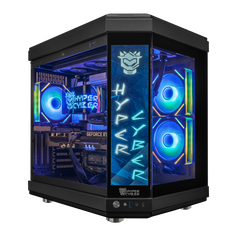
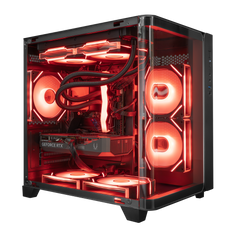
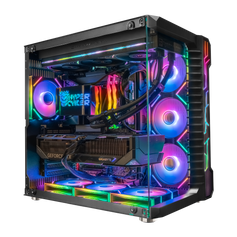
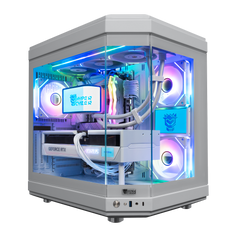
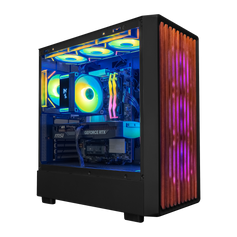
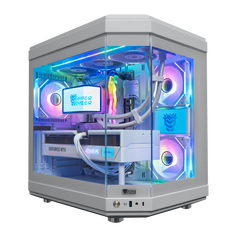

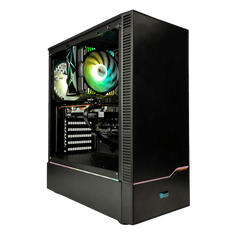
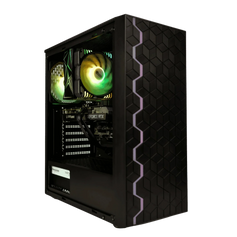

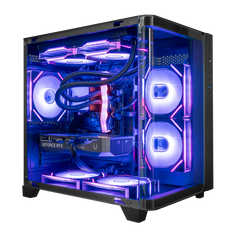
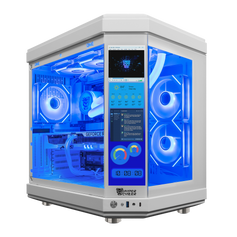
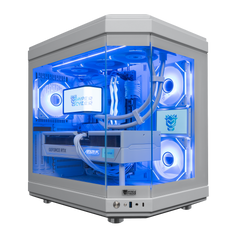






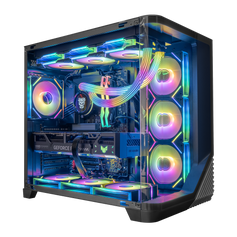
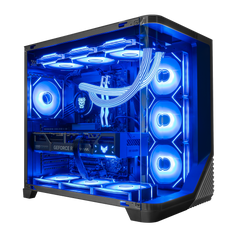


Quick answer: choose a white gaming PC from the monitor, games, applications, and upgrade plan backward. Color can guide the case, visible fans, cable sleeves, cooler, memory heat spreaders, and graphics-card finish. It should not force a weaker GPU, unsuitable processor, cramped cooling layout, undersized power supply, reduced storage, or poor access for future upgrades.
A coherent white system is not simply a list of white parts. It is a complete configuration whose visible surfaces work together without compromising the components that determine how the PC performs, runs, and grows over time. Start with the job, protect the engineering decisions, and then spend the aesthetic budget where it changes what you actually see.
If you want to compare complete systems while reading, open the current white gaming PC collection in a second tab. Inventory changes, so verify the exact processor, graphics card, memory, storage, cooling, power supply, case, and operating system on the individual listing.
The right order for choosing a white gaming PC
The most reliable order is simple: define the display and workload, choose the CPU and GPU balance, size the memory and storage, confirm cooling and power, confirm physical fit, and only then decide how strictly the visible parts need to match.
| Decision | Appearance can influence | Appearance should not override |
|---|---|---|
| Case | Finish, glass layout, shape, and how the system fits the room | Air intake, component clearance, filter access, and serviceability |
| Graphics card | White shroud or backplate when the right model is available | The performance tier, card dimensions, power needs, and required connectors |
| Cooling | Fan frames, radiator finish, tubing, and pump-block design | Processor support, radiator fit, airflow path, and maintenance access |
| Memory | White heat spreaders and lighting | Capacity, platform compatibility, clearance, and a stable supported configuration |
| Power supply | Visible cable color or extensions | Capacity, connectors, form factor, and suitability for the complete system |
| Storage | Almost nothing in a typical finished view | Capacity, drive type, available slots, and the buyer's actual library or workload |
Start with the display and workload, not the color
A gaming PC for a high-refresh competitive display is a different decision from a system for visually demanding 4K play. A machine that also edits video, renders, streams, compiles, or runs other sustained workloads may need a different processor, memory, storage, and cooling balance again.
Write down four things before comparing finishes:
- The monitor resolution and refresh rate.
- The games and applications that matter most.
- Any simultaneous work, such as streaming, recording, editing, or running several applications.
- The storage and upgrade capacity you expect to need over the next few years.
Those answers should define the component tier. If 4K is the real target, compare the component balance and current configurations in the 4K gaming PC collection before deciding which white enclosure or visible finish you prefer. A product photo cannot replace a workload decision.
Where matching white parts usually has the most visual value
The largest visual surfaces do most of the work: the case, fan frames, cooler, visible cable runs, memory, and graphics-card shroud or backplate. Matching these areas can make the system read as one object through the glass.
That does not mean every component needs a white finish. A black power supply behind a shroud, a dark storage device under a motherboard heatsink, or a less visible controller behind the rear panel may contribute almost nothing to the finished view. Paying a premium for a hidden finish is difficult to justify if it displaces budget from the graphics card, cooling, storage, power headroom, or a better-fitting case.
The practical question is not “Can every part be white?” It is “Which surfaces will be visible from the normal viewing angle?” Answer that before spending on color-matched hardware.
GPU choice: protect the target first
The graphics card is often the most visually dominant component after the case, so a white shroud can matter. It is still the wrong place to accept a lower performance tier, unsuitable power requirement, or poor physical fit simply to preserve the palette.
Compare the exact installed model, not only the family name. Card length, thickness, connector position, cooling design, and power requirements can differ by board manufacturer. NVIDIA notes that add-in-card specifications may vary from its reference design; its current GeForce comparison page is a useful starting point for reference specifications. AMD lists current Radeon model requirements on its official graphics specifications page. The individual Hyper Cyber listing remains the source for the card installed in a complete system.
If the right white graphics-card model is available at the required tier and fits the case, it can be an excellent visual choice. If it is not, a neutral or darker card can still look intentional when the surrounding case, cables, cooling, and lighting are coordinated.
Cooling and airflow come before symmetry
Cooling is a system decision. The case intake, exhaust path, graphics-card position, radiator location, fan direction, cable routing, and access to dust filters all interact. A symmetrical fan layout is not useful if it blocks intake, forces a radiator into an unsuitable position, presses a power cable against the side panel, or makes routine service difficult.
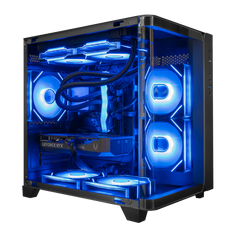
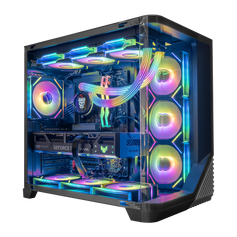
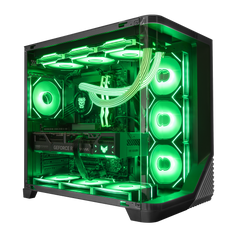
Confirm the exact case and component clearances: graphics-card length and thickness, radiator size and position, memory height, cable bend room, and access to removable panels and filters. Product-family photos can show a design direction; they do not prove that every live configuration uses the same internal parts.
Liquid cooling can be part of the design when it fits the processor, case, acoustic goal, and visual plan. It is not automatically required because the system is white. Compare the available layouts in the liquid-cooled PC collection, then judge the exact configuration rather than the finish alone.
Power delivery and cables: visible detail, engineering first
White cable sleeves can create strong visual continuity because the motherboard, graphics-card, and case-front runs are easy to see. The electrical requirements still come first. The power supply must fit the complete configuration, provide the correct connectors, and leave sensible headroom for the installed hardware.
Do not choose a power supply by exterior color when it sits behind a shroud. Put the visible budget into the correct cables or extensions only after the underlying supply and routing plan are right. Cables should reach without being stretched, crushed, sharply forced against a panel, or routed across an intake.
Memory, storage, and motherboard: match what is visible
White memory heat spreaders can be useful because the modules are usually exposed through the side panel. Capacity and compatibility still matter more than the finish. Choose enough memory for the games and applications, then confirm the selected configuration is supported by the platform and cooler layout.
Storage is usually hidden or visually minor. Choose capacity and available expansion around the real game library, project files, and future needs. Sacrificing storage to pay for a hidden color match rarely improves the finished system.
A motherboard can contribute to the appearance through its heatsinks and exposed areas, but platform, connectivity, storage expansion, rear I/O, and upgrade plans remain the useful reasons to choose it. White or silver accents are a bonus when the board already fits those requirements.
Use lighting to unify the build—not to hide it
White interior surfaces make lighting more visible. That can make a restrained profile more effective than maximum brightness. A solid white setting can keep the system neutral; cooler blue or violet can sharpen the architecture; warmer colors can help the PC sit naturally in a room with wood, fabric, or warmer ambient light.
Choose the hardware for the permanent decisions and treat lighting as adjustable. A build should still look coherent with the lights reduced or turned off. If the design only works at maximum brightness, the underlying color and cable plan may not be doing enough.
A practical white-PC checklist
- Define the monitor, games, applications, and refresh-rate goal.
- Choose the CPU and GPU balance before choosing a color-matched model.
- Confirm memory and storage capacity for the actual workload.
- Check graphics-card, radiator, memory, cable, and panel clearances.
- Size the power supply and connectors for the complete configuration.
- Match the visible case, cooling, cables, memory, and GPU finish where practical.
- Leave hidden parts neutral when matching them would weaken the configuration.
- Verify every exact part on the live product page before ordering.
White gaming PC FAQ
Does a white gaming PC perform differently from a black one?
Color does not determine performance. The processor, graphics card, cooling, power delivery, memory, storage, case airflow, game or application, settings, and display target do. Compare the exact specification rather than treating white as a performance tier.
Do all the parts in an all-white PC need to match?
No. Prioritize the surfaces visible through the glass: the case, fans, cooler, cable sleeves, memory, and graphics-card finish. Components hidden behind the motherboard tray, heatsinks, or power-supply shroud can stay practical when matching them would add cost without changing the finished view.
Are white gaming PCs always more expensive?
Not always. Pricing depends on the exact component, supplier, configuration, and current availability. Some white variants may carry a premium or offer fewer choices, but the correct comparison is between complete live specifications, not color alone.
Does a white PC need liquid cooling?
No. Cooling should be chosen for the processor, graphics card, case, airflow, acoustic goal, and sustained workload. Air cooling or liquid cooling can both fit a white design when the complete layout is appropriate.
How should I keep a white gaming PC clean?
Follow the case and component manufacturers' care instructions, keep vents clear, and clean removable filters as needed for the room and airflow. Use appropriate tools, power the system down before internal cleaning, and do not spray liquid directly into the PC.
What should I prioritize first when choosing a white build?
Start with the display and workload. Then choose the CPU and GPU balance, memory, storage, cooling, power supply, and case fit. Apply the white finish to the visible parts after those requirements are protected.
Choose the system first, then refine the finish
A strong white gaming PC is not a compromise hidden behind a clean color palette. It is a balanced system whose visible parts were coordinated after the important engineering decisions were made.
Compare current white gaming PCs, or start a custom PC request when the available configurations do not match the workload, upgrade plan, and design goal.


