
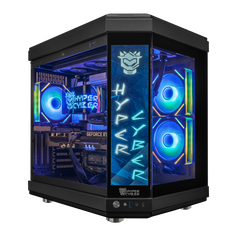
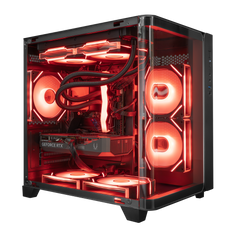
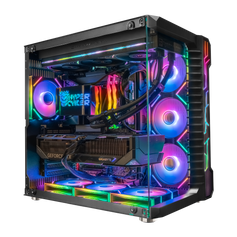
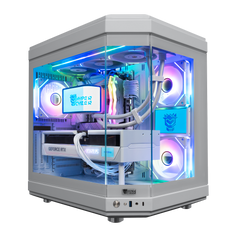
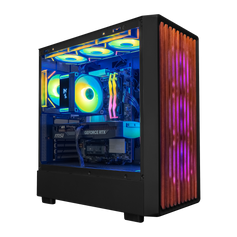
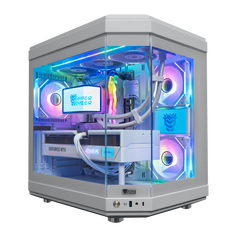
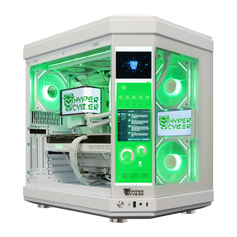
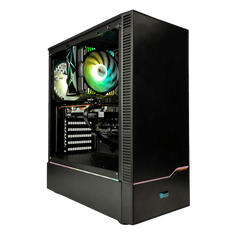
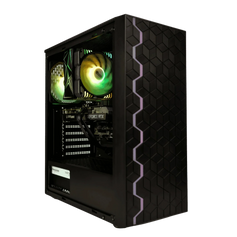
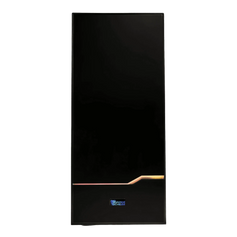
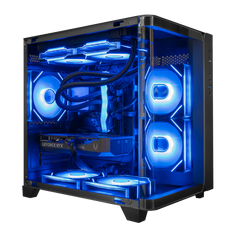

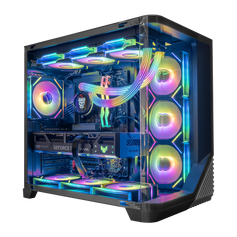
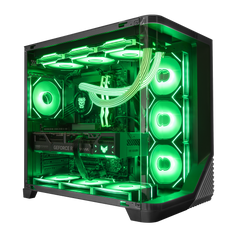
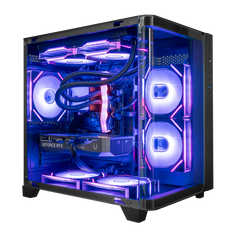
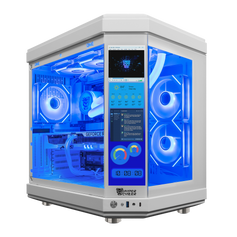
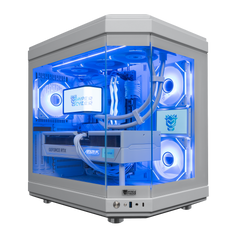








The right gaming PC for Fortnite depends on how you play. For competitive 1080p with Performance Mode, prioritize a strong gaming CPU and consistent frame delivery before overspending on visual features. For 1440p at higher settings, put more of the budget toward the graphics card. If you stream or record while playing, leave extra CPU, GPU, and memory headroom.
Fortnite can run on a wide range of hardware, but its workload changes sharply with resolution, rendering mode, graphics quality, and background applications. Choose the system around the monitor and settings you will actually use, not a single unsupported FPS promise.
Choose a Fortnite PC by your real priority
| Priority | Typical setup | Put the budget here first | Practical memory and storage |
|---|---|---|---|
| Competitive response | 1080p, Performance Mode or lower visual settings, high-refresh monitor | Fast gaming CPU, balanced GPU, reliable cooling, and stable frame delivery | 16GB RAM meets Epic's current recommended requirement; 32GB is useful when streaming or multitasking. Use an NVMe SSD. |
| Higher visual quality | 1440p, DirectX 12, higher textures and effects | More GPU headroom, then a CPU that will not hold back high-refresh play | 32GB RAM and at least 1TB of NVMe storage are practical for the game, updates, clips, and other applications. |
| Streaming or recording | 1080p or 1440p gameplay with capture, voice chat, browser, and broadcast software running | CPU/GPU headroom and a modern hardware encoder, followed by memory capacity | 32GB RAM is the sensible starting point for the combined workload; increase storage if you keep local recordings. |
1080p competitive Fortnite: CPU balance comes first
Fortnite's Performance rendering mode lowers graphical fidelity to reduce the rendering workload. At 1080p with performance-focused settings, a stronger graphics card alone does not guarantee a smoother competitive experience. The CPU still has to process game logic, player activity, building, physics, and the instructions sent to the GPU.
For this use case, choose a current gaming CPU with strong per-core performance, dual-channel memory, an NVMe SSD, and cooling that can maintain normal operating clocks. Pair it with a capable current GPU instead of pushing the entire budget into graphics hardware that the chosen settings may not fully use.
Start with our esports gaming PCs when the monitor and competitive response matter more than maximum visual quality.
1440p Fortnite: visual quality needs more GPU headroom
Moving from 1920×1080 to 2560×1440 increases the number of pixels rendered each frame by roughly 78 percent. Higher textures, effects, view distance, anti-aliasing, and ray tracing can add more GPU load. That is why a 1440p system should reserve more of its budget for graphics performance than a 1080p Performance Mode build.
Epic's current recommended requirements and Epic Quality guidance call for an RTX 3070 or Radeon RX 6700 XT class GPU, 8GB or more of video memory, 16GB RAM, and an NVMe SSD for the Epic Quality preset. Those are quality-preset requirements, not a promise of a particular frame rate. Current game version, drivers, map, mode, settings, and the rest of the system still matter.
For higher 1440p headroom, compare RTX 5070 gaming PCs. NVIDIA's reference RTX 5070 specification includes 12GB of GDDR7 memory and AV1 encoding support, which is relevant when one system needs to handle both gaming and content creation. Exact results depend on the complete configuration and in-game settings.
Streaming Fortnite adds a second workload
Streaming is not only a graphics-card question. Fortnite, broadcast software, browser sources, alerts, voice chat, and local recording can all compete for processor time, memory, and storage bandwidth. A modern GPU hardware encoder can handle video encoding efficiently, but the system still needs enough headroom for the game and the rest of the broadcast stack.
For a dedicated Fortnite-and-streaming system, 32GB of RAM is a practical starting point. Use an NVMe SSD for Windows, Fortnite, and applications. Add storage capacity based on how much local footage you keep. If competitive frame rate is still the priority, test the full broadcast workflow at the same resolution and settings you plan to use live.
Fortnite settings change the hardware decision
Performance Mode
Epic describes Performance rendering mode as a lower-graphical-fidelity option that can improve frame rate, particularly on less powerful hardware. It is the practical starting point for buyers who care most about competitive response.
DirectX 12 and higher visual settings
DirectX 12 is the path for Fortnite's higher visual features and supported super-resolution options. Increasing resolution and image-quality settings shifts more work toward the GPU. Epic notes that ray tracing is not available in Performance Mode and that enabling ray tracing materially reduces frame rate, so treat it as a visual choice rather than a competitive default.
Frame-rate limit and monitor refresh rate
Set a target that makes sense for the monitor. A 144Hz display cannot show 240 unique frames each second. Higher rendered frame rates may still affect latency, but the useful buying target should consider the display, connection, settings, and the consistency of frame delivery, not only a peak number.
Three useful Fortnite system tiers
Efficient competitive tier
Best for 1080p Performance Mode and a high-refresh display. Prioritize the CPU, balanced memory, NVMe storage, and a capable GPU. This tier avoids paying for maximum visual settings the player does not plan to use.
Balanced 1440p tier
Best for players who want competitive response without giving up higher image quality. Use a stronger GPU, keep the CPU balanced for high-refresh play, and choose 32GB of memory if Discord, browsers, capture tools, or creative applications run in the background.
1440p streaming and creation tier
Best for playing, streaming, recording, and editing on one system. Prioritize GPU headroom with a modern hardware encoder, a strong gaming CPU, 32GB or more of memory based on the workflow, and enough NVMe storage for recorded media.
Fortnite gaming PC FAQ
What are Fortnite's current PC requirements?
Epic's current recommended requirements list a GTX 960 or Radeon R9 280 class DX11 GPU, 2GB of video memory, a Core i5-7300U or Ryzen 3 3300U class processor, 16GB RAM, an NVMe SSD, and 64-bit Windows 10 or 11. Epic's separate Epic Quality guidance calls for stronger hardware, including an RTX 3070 or Radeon RX 6700 XT class GPU with 8GB or more of video memory.
Is 16GB of RAM enough for Fortnite?
Yes for the game itself: Epic lists 16GB in both its recommended and Epic Quality requirements. For streaming, recording, browser sources, voice chat, and heavier multitasking, 32GB gives the combined workload more room.
Is the CPU or GPU more important for Fortnite?
It depends on the settings. Competitive 1080p and Performance Mode can make CPU performance and frame consistency especially important. At 1440p with higher visual settings, the graphics card carries more of the load. A balanced system is better than maximizing one part and constraining the other.
Do I need an RTX 5070 for Fortnite?
No. Fortnite can run on much less powerful hardware. An RTX 5070-class system is a higher-headroom option for 1440p visuals, supported NVIDIA features, or gaming while streaming and creating content. It is not required for basic or competitive Performance Mode play.
Do I need ray tracing for Fortnite?
No. Ray tracing is a visual option, not a requirement. Epic says it requires DirectX 12 and is unavailable in Performance Mode. Competitive players normally prioritize response and frame consistency instead of enabling the most demanding visual effects.
Can one PC play and stream Fortnite?
Yes. Choose enough CPU and GPU headroom for the game and broadcast stack, use a modern hardware encoder when available, start with 32GB of memory for the combined workload, and size storage for any local recordings.
Choose the system around your monitor and settings
A Fortnite PC should be selected around one clear target: 1080p competitive play, 1440p visual quality, or simultaneous streaming and recording. Browse current gaming PCs, compare the relevant system tier, or configure a custom PC around your monitor, settings, and workload.


