
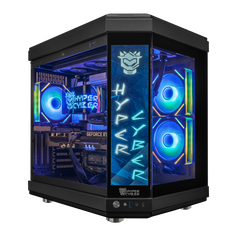
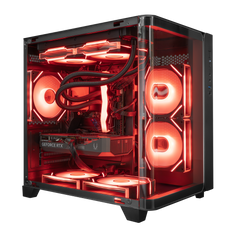
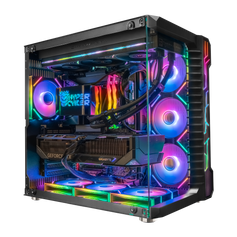
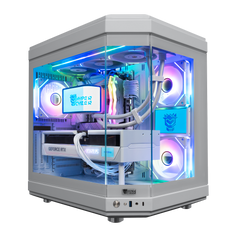
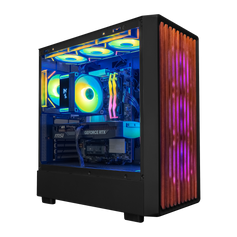
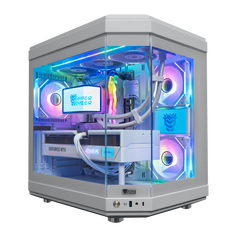

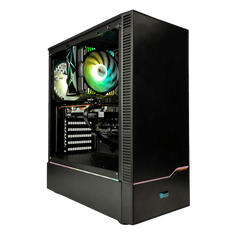
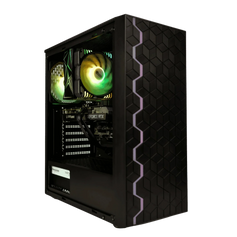

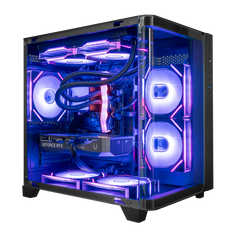
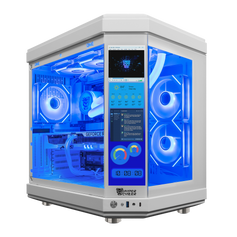
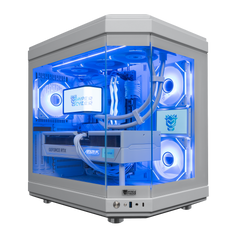






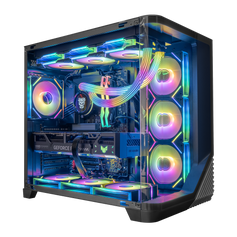
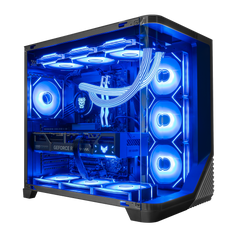


Building a new rig is always exciting, but the central conflict remains the same. You have to pick a side in the eternal war between the Red Team and the Blue Team. We see customers struggle with this choice every day. The modern hardware landscape is complex. Marketing teams from both giants throw big numbers and confusing terminology at you.
We want to cut through the noise. This guide breaks down exactly what matters for your rig. We will look at how the central brain of your computer handles video games, manages heat, and fits into your budget, whether you are leaning toward AMD-based gaming PCs or exploring Intel-powered gaming builds.
Under the hood: architecture and design philosophies
The fundamental difference lies in how these companies build their chips. Intel and AMD took divergent paths years ago, and these choices dictate everything from efficiency to raw speed. Here is how the two giants currently approach silicon design:
- Intel uses a hybrid architecture, mixing strong performance cores with smaller efficiency cores. Their main weapon is high frequency, often pushing clock speeds past 6GHz to gain a brute force advantage.
- AMD uses a chiplet design for its Ryzen series. Their secret weapon for gaming is 3D V-Cache technology, where they stack massive amounts of L3 cache right on the processor to keep data close, the same philosophy behind many of our high-end Ryzen 9 gaming rigs.
This architectural split impacts IPC (Instructions Per Cycle). IPC measures how much work a CPU does in one clock cycle. A high frequency combined with high IPC creates the perfect storm for high frame rates, even if the two brands achieve it in very different ways.
Single-core speed vs multi-core muscle
Gamers often misunderstand how game engines utilize hardware.
The reality is different. Most game engines rely heavily on singlecore performance. The main game loop (logic, AI processing, draw calls) usually runs on one or two primary threads. This makes the singlecore speed the primary bottleneck. If that one main thread cannot keep up, your GPU waits around for instructions. This lowers your total frame rate.
However, multicore performance is not useless. Modern titles are starting to spread the workload more effectively. Engines like Unreal Engine 5 can offload physics, audio processing, and asset streaming to other cores. Having a decent multicore score helps maintain system responsiveness while gaming.
Here is a breakdown of how different scenarios use your hardware:
- Older titles and eSports games rely almost entirely on one fast thread, which maps well to many Intel Core i5 gaming systems.
- Modern AAA open-world games use 6 to 8 threads effectively.
- Streaming while playing demands extra cores to encode video without stuttering.
An Intel i9 or a top-tier Ryzen 9 might have tons of cores, but games rarely touch the majority of them. We advise prioritizing strong individual cores over a massive total count if your main goal is just playing games.
Real-world gaming benchmarks and frame stability
We care about how the processor behaves when you actually play.
The most common metric people look at is average fps. Intel chips often lead in this category due to their aggressive frequency targets. In titles like CS2 or Valorant, the Blue Team often squeezes out a few more frames at the top end. This looks great on a chart.
However, average FPS can be misleading. A game might average 144 frames but dip to 30 every time an explosion happens. This feels terrible to play. That is why we look at 1% lows. This metric represents the lowest frame rates you experience. It indicates stability.
AMD Ryzen processors, specifically the X3D models, excel here. That extra cache keeps frame times consistent, making the game feel smoother even if the peak numbers aren't as high as Intel's
Different genres react differently to these architectures:
- Simulation games benefit from the extra cache on AMD chips.
- Competitive shooters often prefer the raw clock speed of Intel Core processors.
- AAA narrative games usually lean harder on the GPU, making the CPU difference less noticeable.
Intel wins on pure burst speed. AMD wins on consistency and latency reduction in complex scenes.
Thermal management and power draw
The efficiency battle has a clear winner in the current generation.
Intel pushes silicon limits to hit high frequencies, frequently drawing over 250 watts. This massive power dump requires robust liquid cooling to keep the temperature in check and avoid throttling, where the processor slows down to prevent damage.
Conversely, AMD focused on efficiency with its new architecture. Ryzen chips deliver comparable gaming performance while consuming significantly less power, making them much easier to cool.
Here is why thermals matter for your build:
- Lower power consumption means you can buy a smaller, cheaper power supply.
- Less heat means your fans spin slower, resulting in a quieter system.
- Better efficiency prevents heat from soaking into other components like your GPU.
We generally find that Ryzen systems run cooler and quieter. Intel systems require more investment in cooling infrastructure to avoid thermals becoming a problem. You must respect the heat output of a modern Intel Core i7 or i9.
Socket lifespans and future upgrades
Buying a PC is an investment, so you must consider the socket and platform lifespan. Intel's LGA1700 socket has reached the end of the road, meaning you have no future CPU upgrade path. AMD, however, promises long-term support with their AM5 platform, allowing you to drop in a new chip years from now. You also face a memory choice: Intel still supports budget-friendly DDR4, while modern standards require DDR5.
Consider these factors for long-term ownership:
- AM5 provides a guaranteed upgrade path for future generations.
- LGA1700 offers performance now but is a dead end.
- DDR5 is more expensive but essential for future-proofing.
- DDR4 saves money today but cannot move to your next system.
Your choice of chipset also dictates your expansion options, as a high-end chipset supports faster storage and more ports. If you plan to swap parts frequently, the longevity of AMD is currently unbeatable.
Balancing price against performance
Calculating the real price of a build is trickier than just comparing sticker tags. You have to look at the whole ecosystem: the chip, the board, and the cooling.
Intel often wins on sticker price with chips like the Core i5, but high power demands create hidden costs. You often end up spending your savings on a beefier power supply and a serious cooling solution.
AMD Ryzen systems usually require a higher upfront investment in motherboards and DDR5 memory. However, their superior efficiency balances the budget by letting you save money on cooling and electricity bills.
We always tell our customers to prioritize the graphics card for gaming. It makes the biggest difference. Overspending on a premium processor is the most common mistake we see.
Think about your budget this way:
- Throwing $200 more at a GPU usually gets you a tier jump and massive fps gains.
- Throwing that same $200 at a CPU might only get you 3% better performance at high resolutions.
- A balanced mid-range system beats a lopsided top-tier one every time.
You don't need a flagship chip to run a mid-range graphics card. It is a waste of money. We prefer to help you spend that cash on a better monitor or faster storage. Our goal is to find that sweet spot where you pay for frames you can actually see.
Making the final decision
There isn't a single champion here. If someone tells you one brand is objectively "better," they are simplifying things too much. The right choice depends entirely on your specific rig and what games you actually play.
Intel remains the king of eSports, using high frequency to crush input latency in competitive shooters while offering a budget-friendly route via DDR4 support, which is why many competitive players gravitate toward flagship Intel i9 gaming builds.
AMD Ryzen X3D chips win on efficiency and frame stability, running cooler under heavy workloads and providing a guaranteed upgrade path on the AM5 platform.
Here is the cheat sheet we use in the shop:
- Go Blue for pure eSports twitch reactions and maximum peak FPS.
- Go Red for better 1% lows, cooler temps, and long-term support.
- Don't ignore the thermals; an uncool Intel chip loses to a cool AMD chip every time.
You have to weigh the importance of power consumption against raw speed. You have to balance immediate performance against platform longevity.
Our team at HyperCyber is ready to help you finalize this choice. We build systems with both architectures every day. We see the benchmark data and the real-world results. No matter which socket you choose, we can help you get the most out of it.


