




Your monitor serves as the main link between the hardware and your eyes. Every second, the screen refreshes with new data, which is measured by hertz, or the vertical frequency. You can see a number ending in “Hz” on the box. That’s what indicates this value.
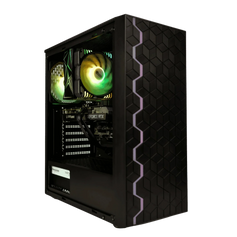
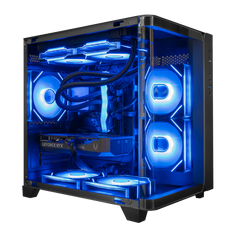
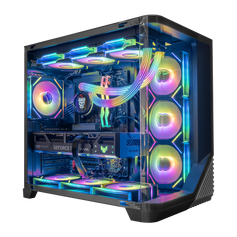
Modern gaming demands much more. We see specs jumping to 144 Hz, 165 Hz, and even hitting 360 Hz these days. A high refresh rate makes the display update frequently enough to trick your brain. This creates real visual smoothness, especially when paired with a capable system like our modern gaming PC builds.
Even dragging a folder across a 60 Hz desktop looks choppy compared to a 144 Hz panel. Most people notice the biggest upgrade going from 60 Hz to 144 Hz, while the difference above 240 Hz is much subtler.
Why speed matters for clear movement
Fast movement often turns into a smudge on slower hardware. We all hate that messy look. A higher refresh rate fixes this by boosting motion clarity. The screen updates object positions so fast that your eyes don't perceive nearly as much blur. This sharpness is non-negotiable for gaming, especially when you need to track a target in a chaotic shooter — something competitive players often experience on high-performance gaming systems. The actual tech inside your monitor dictates how well it handles this speed, and we see three main contenders:
- TN panels used to be the only real choice for speed demons, but they often look washed out.
- IPS technology caught up and now offers great colors with respectable speed.
- VA options provide deep blacks, though they sometimes struggle with dark transitions.
Manufacturers also use a trick called overdrive to push pixels harder. This forces them to change colors faster, but you have to be careful. Too much voltage causes inverse ghosting, which leaves a weird bright trail behind enemies. You should check the response time specs, usually listed as GtG or MPRT, to see how fast a pixel really shifts.
Balancing hardware power and display speed
Your graphics card pumps out images at a specific pace. This is your FPS. The monitor refreshes at its own fixed or variable interval. If the gaming PC renders more frames than the refresh rate can handle, you get tearing. The image looks cut in half because the screen shows parts of two different frames at once.
If the FPS drops too low, you experience stutter. The frame time becomes inconsistent, which creates a jarring visual artifact. G-Sync and FreeSync are adaptive sync solutions. They match the monitor speed to the GPU output, eliminating tearing and reducing stutter. We always recommend activating G-Sync or FreeSync for a consistent experience — especially on hardware that maintains stable frame pacing, like NVIDIA-powered gaming PCs. Smoothness relies on both the GPU and the panel working in harmony.
Matching the specs to your playstyle
Different genres have different requirements. You do not always need a 360Hz panel. We break down common recommendations based on how people play.
- eSports titles need maximum speed, often 240 Hz or higher for the competitive edge, typically driven well by Intel i7 gaming systems.
- Fast shooters work best around 144 Hz to 165 Hz to maintain target tracking.
- Racing games benefit from 120Hz to 165Hz for sensing speed and corners.
- Adventure and story games look great at 60 Hz to 120 Hz.
- Complex simulators depend heavily on your CPU and may not reach high frame rates, which is why many sim players choose Ryzen 9-based PCs for stable performance.
A 4K display demands immense power to hit high numbers. A 1080p TN screen achieves high speeds easily. Visual fidelity lovers might prefer a 1440p IPS or VA screen at a moderate speed. Every frame counts in competitive play. Casual players usually prefer better visuals over raw speed.
Cutting down the delay between click and action
Speed affects more than just visuals. It changes the feel of the game. High frequency lowers input lag. This creates a tighter connection between your hand and the action. Input lag is the delay between moving your mouse and seeing that movement on screen.
A faster monitor draws the newest information sooner. This reduces the total system latency. Competitive players hate delay. A quick response time is vital for landing reaction shots. Even if you cannot see the difference in motion clarity above 144Hz, the reduction in lag helps. We consider this factor essential for anyone playing ranked matches.
Situations where fast panels have less impact
Occasionally an upgrade yields minimal results. If your system cannot output high fps, a 240 hertz rating becomes redundant. The smoothness is limited by the source. Console ports locked at 60 FPS will not look faster on a 144 Hz screen.
Slow strategy games gain less from high speed. You spend most of your time looking at static maps. Bad quality panels might show blur or artifact issues even at high specs. Aggressive overdrive settings can ruin image quality.
System bottlenecks also matter. A weak CPU causes high frame time variance. This makes the game feel jerky regardless of your sync settings. High resolution also limits performance. Running a game at 4K often drops frame rates below the range where G-Sync or FreeSync operates best. Tearing might reappear if you fall out of the range. We advise checking your rig's capabilities before buying a top-tier panel.


