
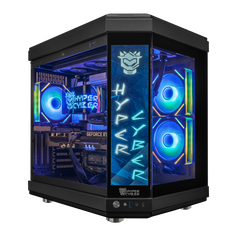
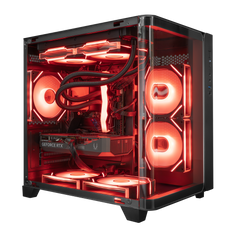
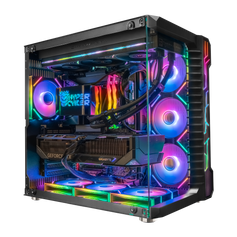
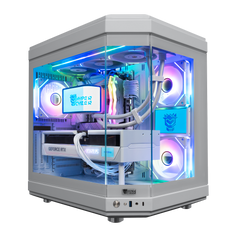
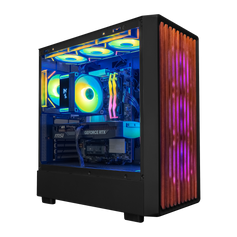
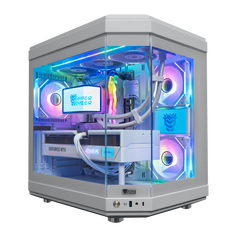
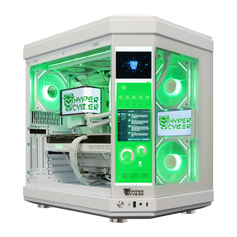
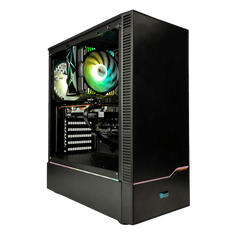

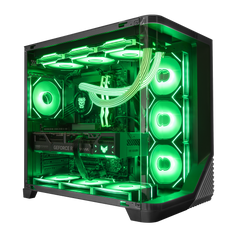
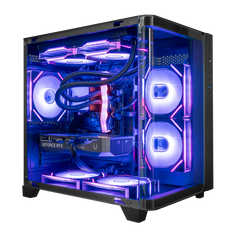
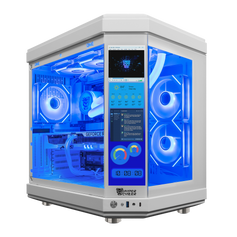
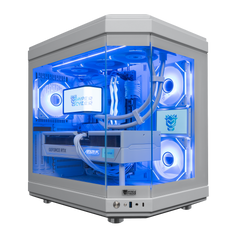






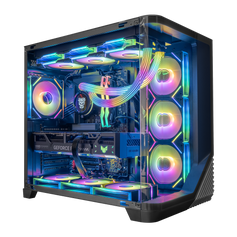
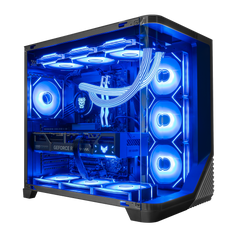


Direct answer: An RTX 5080 build is balanced when the display target and real workload determine the rest of the parts. Start with resolution, refresh rate, the games and applications you use, and any streaming, editing, or AI work. Then choose the CPU, memory, storage, power supply, cooling, and case around those needs. Spending more on every category does not automatically create a better system; the goal is to remove meaningful constraints without paying for capacity or features that will sit unused.
That is also the useful way to think about a custom PC. On our custom PC builder, the component choices sit beside questions about games, applications, AI work, streaming, and performance goals. Those answers matter because two buyers can choose the same graphics card and still need very different supporting parts.
Start with the job the RTX 5080 needs to do
Before comparing processors or memory kits, write down the target. A short, specific brief makes the rest of the build easier to judge:
- Your monitor resolution and refresh rate.
- The three to five games or applications you use most.
- Whether you stream, edit video, render, run virtual machines, or use local AI tools.
- How much active storage you need now and how quickly the library is growing.
- Your preferences for case size, noise, lighting, and future upgrades.
The RTX 5080 uses NVIDIA's Blackwell architecture and includes 16 GB of GDDR7 memory. It is positioned as a high-end option for demanding gaming and graphics workloads, but the experience still varies by title, settings, resolution, drivers, and the rest of the system. A component list should therefore answer a named use case, not promise one result for every buyer.
Put extra budget where it changes the experience
| Build area | When more budget can make sense | When to stay practical |
|---|---|---|
| CPU | High-refresh, CPU-sensitive games or heavily threaded work | GPU-heavy 4K play where a higher CPU tier will not change the target |
| Memory | Large creative projects, virtual machines, local AI work, or unusually heavy multitasking | Gaming and normal mixed use that fit comfortably in 32 GB |
| Storage | A large active game or project library that must stay local | Buying capacity far ahead of a realistic need |
| Power and cooling | The complete parts list, case airflow, acoustics, and upgrade plan require it | Choosing oversized parts from a generic rule instead of the actual system |
| Appearance | The case, lighting, or presentation is part of what you value | Visual upgrades would displace performance or capacity you will use |
How we think about CPU pairing
There is no single processor that is automatically correct for every RTX 5080 build. High-refresh and CPU-sensitive games can benefit from stronger gaming CPU performance, particularly at lower resolutions where the graphics card is less likely to be the only limit. At 4K, the rendering load often shifts more heavily toward the GPU, so the value of moving to a more expensive CPU depends on the title and the frame-rate target.
The answer changes again when the PC is also a workstation. Streaming, rendering, editing, code compilation, virtual machines, and other threaded work can justify more CPU cores even when gaming alone would not. The useful question is not “What is the most powerful CPU available?” It is “Which CPU meets the gaming target and the non-gaming workload without taking budget away from a part that matters more?”
Choose memory and storage from actual usage
For many current gaming builds, 32 GB is a practical starting point.
Component guidance is only part of the work; the finished configuration also needs system-level checks before shipment. See how Hyper Cyber tests gaming PCs before shipping.
Moving to 64 GB can be reasonable for heavier creation, large datasets, local AI tasks, virtual machines, or a workflow that regularly approaches the lower capacity. It should be a workload decision, not an automatic checkbox attached to a high-end graphics card.Storage deserves the same treatment. Estimate the operating system, core applications, active projects, and the games you want installed at the same time. Leave sensible working room, then decide whether one larger drive or a staged expansion plan fits better. Extra capacity can be useful; unused capacity does not improve frame rate.
Size the power supply, cooling, and case together
NVIDIA's current reference specifications list 360 W total graphics power for the GeForce RTX 5080 and an 850 W required system power figure. Those figures are a starting point, not a substitute for checking the exact add-in card and complete build. Board-partner requirements, CPU choice, transient behavior, connector layout, installed drives, fans, and planned upgrades can change the correct answer.
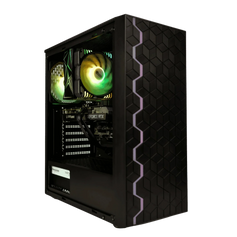
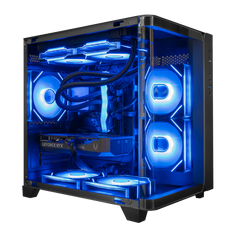
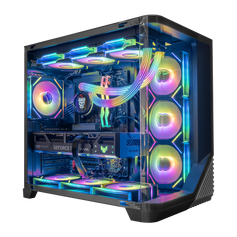
Cooling and case airflow should be planned with that complete system in mind. The cooler must suit the selected processor; the case must support the graphics card dimensions, radiator or air-cooler clearance, fans, and cable routing; and the fan plan should move air through the case without relying on appearance alone. Exact graphics-card dimensions can also vary by manufacturer, so verify the selected model instead of assuming every RTX 5080 card uses the reference size.
Official reference details: NVIDIA GeForce RTX 5080 specifications.
Where we avoid unnecessary spend
- A higher CPU tier when the named games, resolution, and refresh target do not benefit enough to justify it.
- 64 GB of memory when the buyer's gaming and application workload fits comfortably in 32 GB.
- Storage capacity that is unlikely to be used within the life of the current build plan.
- Premium visual components when the buyer would rather protect performance, capacity, or acoustics.
- A jump to the RTX 5090 without a clear need for its additional memory, performance headroom, or workload fit.
None of those choices is inherently wrong. The point is to connect each upgrade to something the owner will notice or use.
A practical configuration brief
A good RTX 5080 request can be short. Include the monitor resolution and refresh rate, the main games, any work or creator applications, the desired installed storage, noise and size preferences, appearance priorities, and likely future upgrades. That gives every supporting component a reason to be in the build.
If you are comparing ready-to-use systems, start with our current RTX 5080 gaming PCs. If the processor, memory, storage, cooling, or case needs to follow a more specific brief, use the custom PC builder. Buyers focused specifically on resolution can also compare the broader 4K gaming PC collection.
RTX 5080 build FAQ
Is the RTX 5080 a good choice for 4K gaming?
It is a high-end option designed for demanding gaming, including 4K use. Exact frame rates depend on the game, settings, ray tracing, upscaling or frame-generation choices, drivers, and the rest of the system, so check title-specific evidence for the experience you want.
What CPU should I pair with an RTX 5080?
Choose from the resolution, refresh rate, games, and non-gaming workloads. High-refresh or CPU-sensitive titles can justify a stronger gaming processor; heavily threaded work can justify more cores. At 4K, the graphics card often carries more of the rendering load.
Do I need 32 GB or 64 GB of RAM?
32 GB is a practical starting point for many gaming and mixed-use builds. Choose 64 GB when your real applications, project sizes, virtual machines, local AI work, or multitasking pattern benefit from the additional capacity.
Is an 850 W power supply enough for an RTX 5080?
NVIDIA lists 850W as the required system power for its reference configuration. The correct power supply still depends on the exact graphics card, CPU, complete component list, connector requirements, and upgrade plan. Follow the selected board partner's guidance and validate the whole system.
When should I consider an RTX 5090 instead?
Consider it when a specific workload needs more graphics memory, higher performance headroom, or capabilities the RTX 5080 configuration does not meet. Compare the full build and intended use rather than choosing only by model number.
Build for the workload, not the longest specification sheet
The best RTX 5080 configuration is the one that reaches the display and workload target with balanced supporting parts. Define that target first, give every upgrade a job, and keep the budget available for the parts you will actually use.


