





Storage plays a role as vital to your system's responsiveness as the CPU or GPU. Mechanical drives used to be a standard, but the game has changed with the addition of two options: SATA and NVMe. Let’s break down the differences between them and see which one poses a bigger value for you.
The HDD Graveyard: Why Mechanical Drives Fail Gamers
HDDs (Hard Disk Drives), which used to be the standard choice for storage, relied on a spinning platter and a physical read/write head to access data. Today, this method causes latency with modern software that requires higher read write speeds. For gaming, it means a drop in performance, texture pop-in, and long load times.
SATA vs. NVMe: The Bandwidth Battle
Moving to an SSD (Solid State Drive) eliminates moving parts, but not all solid-state drives are equal. The primary distinction lies in the interface and the protocol they use to communicate with your motherboard.
SATA (Serial ATA) was originally designed for spinning hard drives. Housed in a 2.5-inch form factor, a SATA SSD maxes out the interface's capabilities, but is capped at a theoretical limit of 600 MB/s.
NVMe (Non-Volatile Memory Express) is a protocol built specifically for flash memory. It operates over the PCIe (Peripheral Component Interconnect Express) bus, which is the same high-speed lane your graphics card uses. This allows for significantly higher bandwidth. An NVMe drive typically connects directly to the motherboard via an M.2 slot.
Here is a breakdown of the technical specifications:
- SATA III drives usually offer speeds around 500–550 MB/s.
- PCIe 3.0 NVMe drives can reach speeds up to 3,500 MB/s.
- PCIe 4.0 NVMe drives push performance up to 7,500 MB/s.
- PCIe 5.0 drives are now hitting markets with speeds exceeding 10,000 MB/s.
The technical differences are massive on paper. An NVMe drive offers read write speeds that are often 6 to 12 times faster than its SATA counterpart. However, raw throughput numbers do not always translate linearly to user experience.
Real-World Gaming: Does the Speed Gap Matter?
Marketing materials often highlight sequential read speeds, but games rely heavily on random read operations. When you run a comparison between a high-end NVMe drive and a quality SATA SSD, the results in current titles are often surprising.
For most existing games, the difference in load times is negligible. You might save one or two seconds loading a level on a fast NVMe drive compared to a standard SSD. Both technologies are miles ahead of mechanical drives, but the diminishing returns are real. Your boot time will also look very similar regardless of which solid-state drive you choose. The operating system initializes drivers and peripherals, which takes a set amount of time regardless of how fast the drive can read data.
Factors influencing real-world results include:
- Game engine optimization.
- CPU processing power (decompressing game assets).
- RAM speed and capacity.
If you are building a budget-focused gaming computer, a standard SATA drive still provides a snappy, responsive experience. The premium you pay for Gen 4 or Gen 5 speed might be better spent on a better GPU or more RAM. However, price drops have made M.2 drives extremely competitive, often costing the same as their slower counterparts.
DirectStorage and the Future of Asset Streaming
While current games show minor differences, the industry is shifting. Microsoft developed a technology called DirectStorage to address the bottlenecks in traditional data processing.
In traditional data handling, assets travel from the drive to the RAM, then to the CPU for decompression, before finally hitting the GPU’s VRAM. This creates a bottleneck, as the CPU has to work overtime, which puts a heavy load on the processor. DirectStorage allows the NVMe SSD to bypass the CPU and send compressed data closer to the GPU. This technology takes full advantage of the high bandwidth provided by the PCIe interface.
This shift changes the value proposition significantly. Future titles built with DirectStorage in mind will require the high speed of an NVMe drive to function correctly. Without it, gamers may experience stuttering as the drive fails to stream high-fidelity assets fast enough.
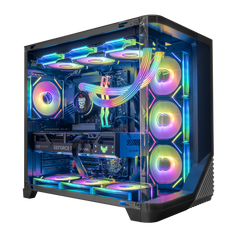
If you plan to own a high-performance desktop with NVidia RTX graphics, pairing it with a fast NVMe drive prepares your system for next-generation titles. This combination allows for instantaneous world traversal and near-zero loading screens, fundamentally changing game design.
Choosing the Right Configuration and Capacity
Selecting the right storage involves balancing price, capacity, and compatibility. Modern motherboards usually support multiple M.2 drives, but you should always check your manual to see which PCIe generation each slot supports.
Buying a 250 GB or 500 GB drive is rarely a good investment today. Modern games frequently exceed 100 GB individually. A 1 TB drive is the practical minimum for a primary drive, with 2 TB becoming the sweet spot for enthusiasts.
Consider these configuration strategies for optimal gaming and system use:
- Use a high-speed NVMe (Gen 4) for your OS and main multiplayer games to minimize latency.
- Add a high-capacity, budget M.2 or SATA SSD for your secondary game library.
- Verify motherboard compatibility before buying Gen 5 drives, as they require specific heatsinks and slot support.
The price gap between SATA and NVMe has narrowed so much that going for the faster standard is almost always the right choice for a new build. The M.2 form factor also reduces cable clutter, improving airflow inside your case.
Summary
The comparison between these technologies leads to a clear verdict. While a SATA SSD is still serviceable, NVMe is the new standard. It offers superior read write speeds, cleaner installation, and better future-proofing for technologies like DirectStorage.
For the best value, aim for a PCIe 4.0 NVMe drive with at least 1 TB of capacity. This guarantees your system handles current tasks effortlessly while remaining ready for the demanding games of tomorrow. You do not need the most expensive drive on the market, but avoiding mechanical storage and investing in a decent SSD remains the single best upgrade for overall system responsiveness.


