
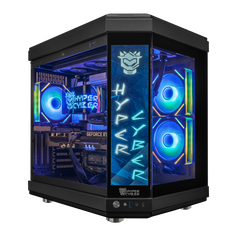
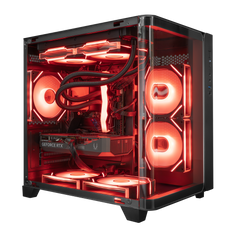
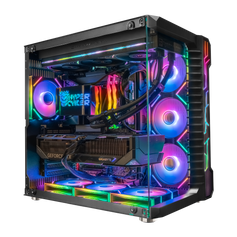
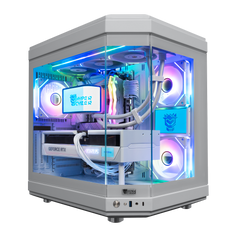
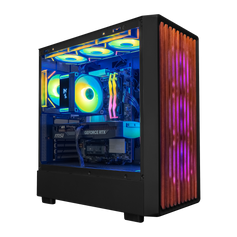
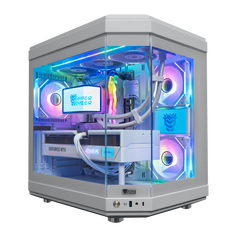
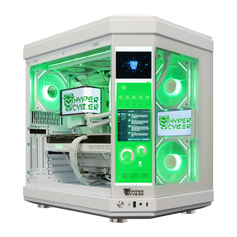
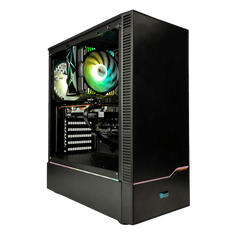







For a complete decision framework, read our RTX 5080 vs RTX 5090 comparison, including graphics memory, power, cooling, creator workloads, and complete-system tradeoffs.
Reciprocal link from the RTX 5090 collection, only after step 4 and after the article returns 200: Source: https://hypercyber.com/collections/nvidia-rtx-5090-gaming-pc Placement: Immediately after the first paragraph under `RTX 5090 or RTX 5080?` Paste-ready copy:Read the complete RTX 5080 vs RTX 5090 comparison before choosing a complete configuration.
Completion check: All seven links return 200, use clean HTTPS URLs, contain no UTM parameters, and appear once in the intended section. 4. Replace the still-live unsupported RTX 5090 collection description before strengthening it with the article link. Current URL: https://hypercyber.com/collections/nvidia-rtx-5090-gaming-pc Exact action: Replace the current collection `descriptionHtml` in full with the block below. This removes the unsourced FPS chart, fixed-FPS promises, `only card`, `zero latency`, `absolute stability`, `DLSS 3.5`, universal 8K, and `future-ready` claims that remain live today. Paste-ready replacement HTML:RTX 5090 gaming PC FAQ
Does every 4K gaming PC need an RTX 5090?
No. The right GPU depends on the game, settings, refresh-rate target, CPU, and complete-system budget. The RTX 5090 is most appropriate when maximum GPU headroom or 32 GB of graphics memory solves a defined need.
How much graphics memory does the RTX 5090 have?
NVIDIA lists 32 GB of GDDR7 memory for the GeForce RTX 5090. More capacity is useful when a real game, creator project, 3D scene, or local AI workload exceeds the memory available on a lower-tier card.
Should I choose an RTX 5080 or RTX 5090 system?
Choose the RTX 5080 for a balanced high-end gaming system when 16 GB of graphics memory fits the workload. Choose the RTX 5090 when 32 GB of memory, maximum GeForce GPU headroom, or a demanding professional workload creates a clear benefit.
What should I compare besides the GPU?
Compare the processor, memory capacity and configuration, storage, exact graphics-card model, power supply, cooling, case clearance, operating system, and the monitor or application target.


