
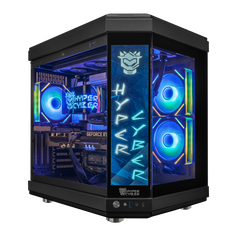
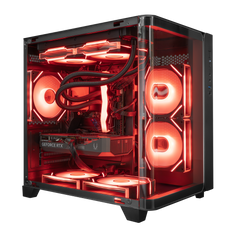
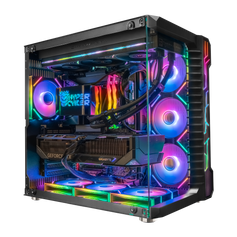
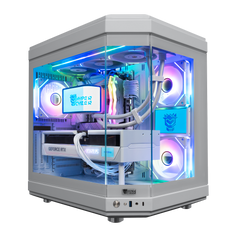
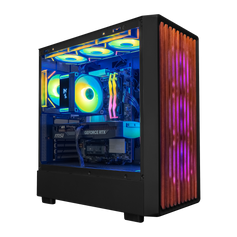
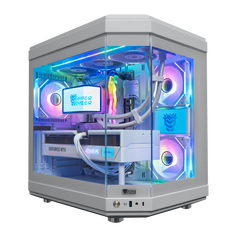
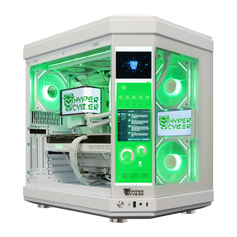
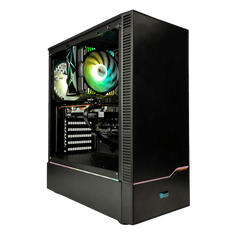
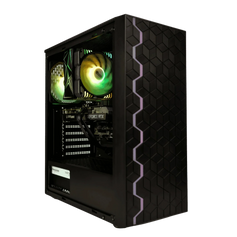
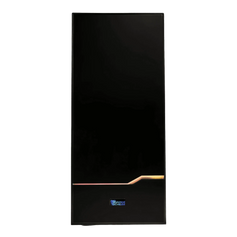
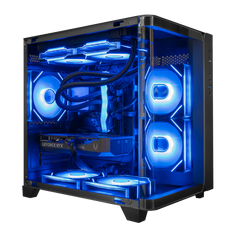
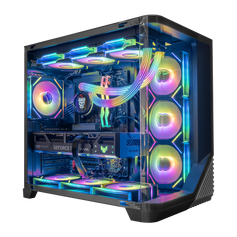
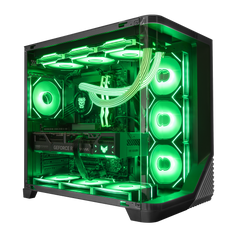
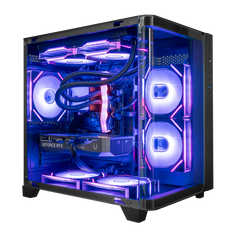
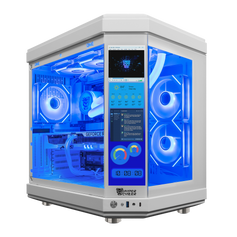
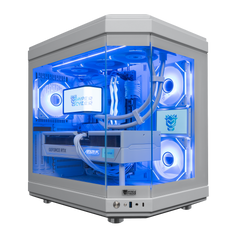




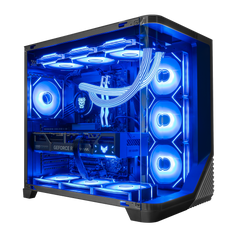

Form factor describes the physical size and layout standard for PC components, especially motherboards and cases. Common motherboard form factors include ATX, micro‑ATX (mATX), and mini‑ITX.
Motherboard and Case Form Factors
Typical options:
- ATX – Full‑size; most expansion slots and features, fits mid‑ and full‑tower cases.
- micro‑ATX – Shorter board with fewer slots; good balance of size and expandability.
- mini‑ITX – Very compact; ideal for small builds but with limited slots and ports.
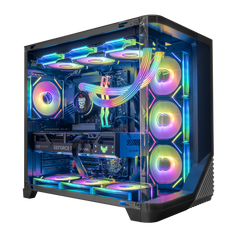
Your case must support the motherboard’s form factor, and vice versa. Compact form factors are popular in curated builds like white gaming PCs, black gaming PCs, and transparent gaming PCs that emphasize aesthetics and space efficiency.
Why Form Factor Matters
Form factor influences:
- how many GPUs and expansion cards you can install
- how many RAM slots and M.2 slots you get
- what size CPU coolers and PSUs will fit
- cable management options and airflow
Smaller systems look clean and save space but can be harder to build and cool, especially with high‑TDP components. Larger ATX towers are more forgiving and upgrade‑friendly.
Related Concepts
-
Motherboard – Its form factor defines case compatibility and expansion potential.
-
Power Supply Unit – Must match the case standard (ATX vs SFX).
-
Cooling – Big air coolers and radiators require cases with enough clearance.
- GPU – Large, triple‑fan GPUs may not fit in very small cases.


