










VRAM (Video Random Access Memory) is the dedicated memory built into your graphics card. It stores the data the GPU needs right now to render a frame: textures, geometry buffers, shadow maps, framebuffers, and more. Unlike system RAM, VRAM sits directly on the graphics card, with extremely high bandwidth and low latency access for the GPU.
When VRAM runs out, the GPU has to page data back and forth from slower system RAM or storage. That’s when you see stutters, hitching, long frame times, and even crashes at high resolutions or ultra settings.
How VRAM Affects Gaming
Every frame your GPU renders pulls data from VRAM:
- high‑resolution textures,
- model and geometry data,
- post‑processing buffers,
- ray tracing acceleration structures,
- UI and particle effects.
The more detailed the scene and the higher the resolution, the more VRAM is needed. That’s why 1080p gaming can be fine on 8GB GPUs, while 4K with ultra textures can push 12–16GB or more.
If your card doesn’t have enough VRAM for the settings you’ve chosen, symptoms include:
- sudden drops in FPS when entering new areas,
- textures loading in late or appearing blurry,
- spikes in frametime when turning quickly,
- occasional driver resets or game crashes.
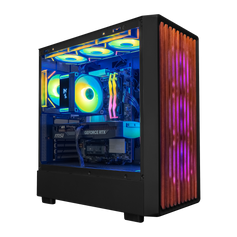
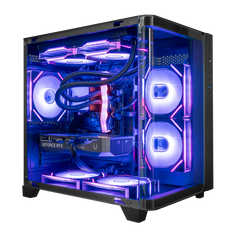
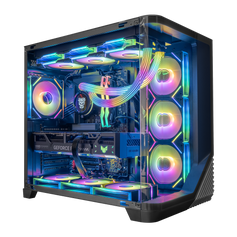
Modern NVIDIA gaming PCs and AMD Radeon gaming PCs are configured with this in mind – entry‑level builds target smooth 1080p, while higher‑VRAM cards are paired with 1440p and 4K‑focused systems.
How Much VRAM Do You Really Need?
Approximate targets for today’s games:
- 6GB–8GB – Entry‑level; fine for 1080p Medium/High in most titles, but tight for heavy AAA games on Ultra.
- 10GB–12GB – Strong for 1080p Ultra and solid for 1440p High/Ultra in most modern games.
- 16GB+ – Recommended for 1440p Ultra with heavy texture packs and for serious 4K gaming.
For competitive players on esports gaming PCs, VRAM requirements can be slightly lower because visual settings are often tuned down in favor of maximum FPS. For cinematic, high‑fidelity experiences on 4K gaming PCs, more VRAM gives you room to enable ultra textures and ray tracing without worrying about sudden memory walls.
VRAM and Future‑Proofing
VRAM demands have been climbing steadily with each generation:
- higher texture resolutions and density,
- more complex materials and lighting,
- heavier ray tracing and global illumination,
- larger worlds with more on‑screen detail.
Choosing a GPU with a comfortable VRAM buffer helps your system age gracefully. A card that is only just enough today may feel constraining in a year or two as new engines and texture packs arrive.
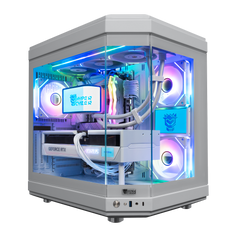
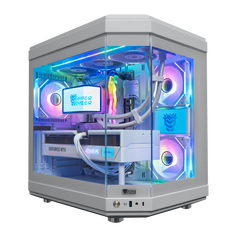
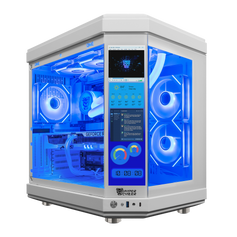
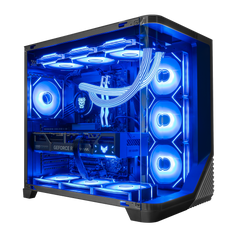
When browsing prebuilt systems – whether gaming PCs in general or themed builds like white gaming PCs and transparent gaming PCs – always check not just the GPU model, but also how much VRAM it actually has.
Related Concepts
- GPU – The graphics processor that uses VRAM to store the data required for each frame.
- FPS – Frames per second; can tank if VRAM is overfilled and the GPU starts paging data.
- Ray Tracing – Increases VRAM usage due to additional data structures and buffers needed for lighting calculations.
- CPU – The processor whose TDP rating guides cooler and power supply selection.
- Cooling – Air or liquid solutions sized to handle the total heat output of the CPU and GPU.
- Power Supply Unit (PSU) – Must provide enough wattage and stable current to cover component TDP plus headroom.


