
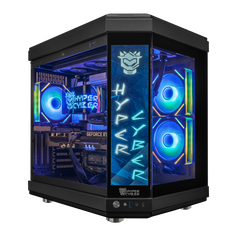
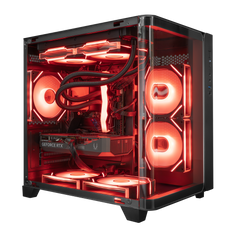
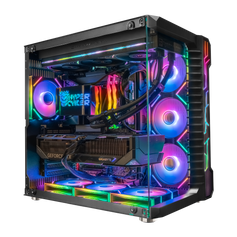
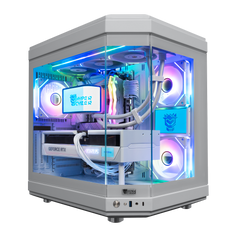
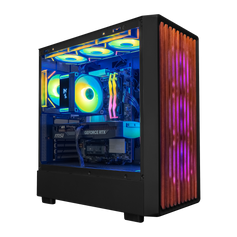
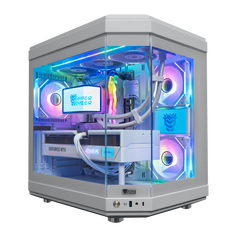
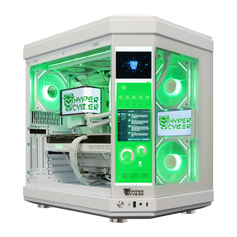
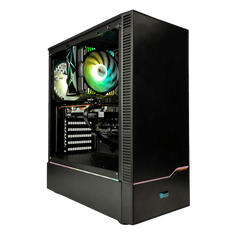
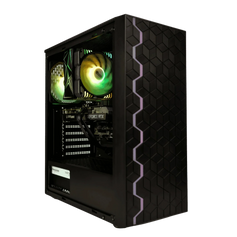
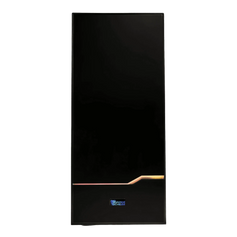
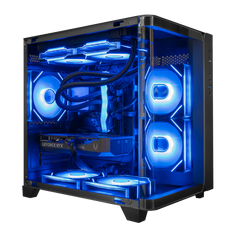

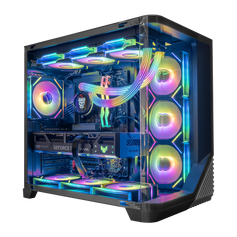
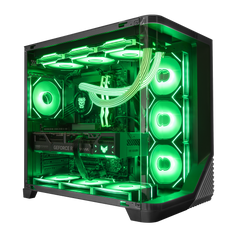
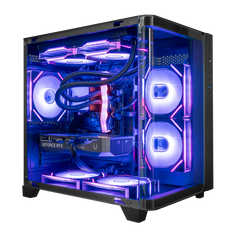
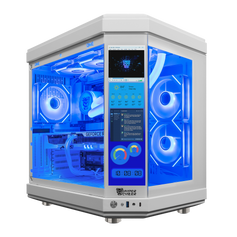
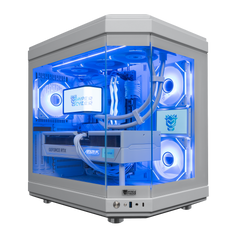






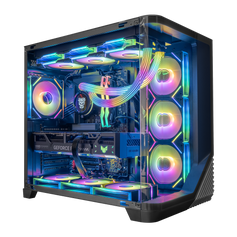
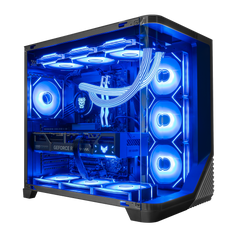


The best gaming PC in 2026 is the one built for your display, games, workload, and upgrade plan—not the machine with the longest specification list. Start with the resolution and frame-rate target you want, check the requirements of the games and software you actually use, and then balance the graphics card, processor, memory, storage, cooling, and power around that job. If your ceiling is $3,000, compare the current Hyper Cyber gaming PCs under $3,000; the configurations change, so use the live product pages for current components and availability.
Updated September 16, 2026. Product examples below were visible in the live collection on the update date and may change. This is a buying framework, not a claim that one configuration is best for every game or user.
Define the Target Before Comparing Parts
A useful gaming-PC recommendation begins with five questions: What display resolution will you use? What refresh rate or frame-rate range matters? Which games do you play most? Will the PC also stream, edit, render, compile, or run other demanding software? What do you expect to upgrade later?
Those answers change the component balance. A competitive player targeting high frame rates at modest settings can have different priorities from someone playing visually demanding single-player games at 4K. A mixed gaming and creative workload can justify different CPU, memory, or storage choices than gaming alone. No single parts list can represent all three buyers honestly.
Choose the GPU for the Display and Games
The graphics card is central to most gaming builds, but the model name by itself does not answer the buying question. Compare performance for the exact games, resolution, graphics settings, ray-tracing settings, upscaling mode, and frame-rate target you expect to use. Independent, game-specific benchmarks are more useful than a universal “4K ready” label.
The live under-$3,000 collection included multiple systems with GeForce RTX 5060 graphics when this guide was updated. NVIDIA’s official RTX 5060 family page documents the product family and supported technologies, but it does not replace game-by-game testing for your intended settings. Check the complete product configuration and current third-party benchmarks before deciding.
Match the CPU to the Frame-Rate Target and Workload
The processor handles game logic, simulation, background tasks, and non-gaming work. Very high frame-rate targets, some strategy and simulation games, streaming, compiling, and creation applications can raise CPU demands. At higher resolutions or graphics settings, the graphics card can become the more obvious limit. The balance depends on the complete workload rather than a rule that one CPU is always the correct match for one GPU.
Current examples in the under-$3,000 collection included systems based on the AMD Ryzen 7 7800X3D, AMD Ryzen 5 9600X, and Intel Core i7-14700K. For verified specifications, use the official product pages for the Ryzen 7 7800X3D, Ryzen 5 9600X, and Core i7-14700K. Treat those specifications as inputs to the decision, not proof of performance in every game.
Use Memory and Storage to Solve Real Requirements
Choose memory around the games, applications, and multitasking you actually run. More capacity can help when a workload needs it, but unused capacity does not automatically improve gaming. Check the memory generation, total capacity, module configuration, and upgrade path shown on the individual product page.
Storage decisions are similarly practical. Estimate the space required for the operating system, active game library, applications, recordings, and project files. A larger drive can reduce day-to-day file management, while a smaller initial drive may leave more budget for a higher-priority component. Confirm the installed capacity and available expansion options for the exact system.
Do Not Treat Cooling, Power, and the Motherboard as Footnotes
Cooling and airflow should suit the heat generated by the selected parts and the environment where the computer will run. The power supply needs the right capacity, connectors, and quality for the complete configuration. The motherboard determines important details such as socket and memory support, storage expansion, networking, ports, and future compatibility.
These supporting parts rarely make the headline, but they can determine whether a build fits the buyer’s space, noise preference, connectivity needs, and upgrade plan. Review the exact product specifications and ask for clarification when a required detail is not listed.
Current Under-$3,000 Examples Show the Tradeoffs
When this guide was updated, the live collection showed active PULSE configurations including:
- Ryzen 7 7800X3D, GeForce RTX 5060 8GB, 16GB DDR5 memory, and a 4TB NVMe SSD.
- Ryzen 7 7800X3D, GeForce RTX 5060 8GB, 32GB DDR5 memory, and a 1TB NVMe SSD.
- Ryzen 5 9600X, GeForce RTX 5060 8GB, 32GB DDR5 memory, and a 2TB NVMe SSD.
The examples share a price band but allocate the component budget differently. One offers more initial storage, another more memory, and another a different processor platform. That does not establish a universal winner. It shows why buyers should compare the complete system against their own workload. See the live gaming PCs under $3,000 for current configurations, product details, prices, and availability.
How to Compare a Prebuilt Gaming PC
- Write down the target. Record the display resolution, refresh rate, main games, desired settings, and non-gaming work.
- Check the exact configuration. Read the CPU, GPU, memory, storage, motherboard, cooling, power supply, networking, ports, and case details.
- Use relevant evidence. Look for current independent benchmarks for the games and settings that resemble your target.
- Check support and fulfillment details. Review the current product page for availability, warranty, shipping, returns, and included accessories.
- Compare the upgrade path. Decide whether memory, storage, graphics, connectivity, or another part is likely to change later.
If the live systems do not match the balance you need, use the Hyper Cyber custom PC builder. Buyers working with a lower ceiling can also read the gaming PC under $2,000 guide. For more context on our internal process, see how Hyper Cyber tests gaming PCs.
Frequently Asked Questions
What is the best gaming PC in 2026?
There is no universal best model. The right system is the one that meets your target resolution, frame rate, game mix, workload, budget, and upgrade plan. Compare complete configurations and relevant benchmarks rather than ranking systems by one component.
How much should I spend on a gaming PC?
Set the budget after defining the experience you want. A lower-cost system may be appropriate for lighter games or modest settings, while demanding resolutions, high frame-rate targets, streaming, or creative work may require a different balance. Spend on requirements you can identify, not a price tier alone.
Should a gaming PC prioritize the GPU or CPU?
It depends on the games, resolution, settings, and other software. Visually demanding settings can place more load on the GPU, while high frame-rate targets and CPU-heavy games or applications can increase processor demands. Review the complete workload before choosing.
Is 16GB or 32GB of memory better for gaming?
Use the requirements of your games and applications. Some setups can meet their needs with 16GB, while heavier multitasking, creation work, or particular software can justify 32GB or more. Also check the memory configuration and future expansion options.
Can a gaming PC under $3,000 handle 4K?
Some configurations can suit particular 4K games and settings, but results vary by title, graphics preset, upscaling, ray tracing, and frame-rate target. Check current benchmarks for the exact GPU and CPU combination and the settings you plan to use.
Is a prebuilt or custom gaming PC better?
A prebuilt can simplify component selection, assembly, and support. A custom configuration can be useful when you need a specific balance of performance, appearance, connectivity, storage, or upgrade options. The better path is the one that fits your requirements and the current terms offered.
Choose the System Around the Job
Start with the screen, games, software, and experience you want. Then compare the GPU and CPU as a pair, make sure the memory and storage fit real usage, and verify the supporting hardware and service details. Browse the current Hyper Cyber gaming PCs, compare gaming PCs under $3,000, or build a custom PC when the available configurations do not match your target.


