
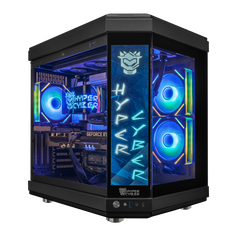
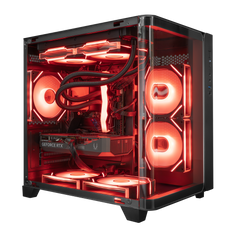
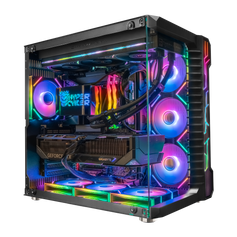
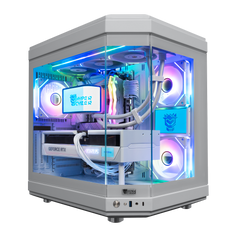








Direct answer: an RTX 5090 upgrade makes sense when its added graphics memory, newer supported features, or capability in a specific workload solves a limit you can identify. If an RTX 4090 already meets the games, applications, and display target that matter, keeping it may be the better decision.
The RTX 4090 was NVIDIA's flagship for the previous generation and remains a very capable card. The RTX 5090 replaces it at the top of the GeForce lineup. This guide covers what actually changes between them, what stays the same, and how to decide whether an upgrade is worth it for you.
RTX 5090 vs RTX 4090 at a glance
| Reference specification | RTX 5090 | RTX 4090 |
|---|---|---|
| Architecture | Blackwell | Ada Lovelace |
| CUDA cores | 21,760 | 16,384 |
| Graphics memory | 32 GB GDDR7 | 24 GB GDDR6X |
| Memory interface | 512-bit | 384-bit |
| Total graphics power | 575 W | 450 W |
| NVIDIA-listed required system power | 1,000 W | 850 W |
| Frame generation | DLSS 4 Multi Frame Generation | DLSS Frame Generation |
| PCIe interface | PCIe 5.0 | PCIe 4.0 |
These are NVIDIA's reference figures. Partner cards can differ in clocks, dimensions, cooling, and power behavior. Sources: NVIDIA GeForce RTX 5090 and NVIDIA GeForce RTX 4090.
What changes with the RTX 5090
More graphics memory
32 GB instead of 24 GB is the clearest difference. It matters most for work that fills the card's memory: large 3D scenes, heavy video projects, local AI models, and games with very high-resolution textures or mods. If your current work never comes close to 24 GB, the extra memory may not change much for you.
More raw graphics capability
The RTX 5090 has more CUDA cores and much higher memory bandwidth. In demanding games at 4K, independent reviews generally show it ahead of the RTX 4090, but the size of the gap varies a lot by game, settings, and the rest of the system. Check results for the specific games you play rather than relying on one average.
Multi Frame Generation
DLSS 4 Multi Frame Generation is available on RTX 50 Series cards, not on the RTX 4090. In supported games it can generate several frames for each rendered frame, raising the displayed frame rate and smoothing motion. It is most useful on high-refresh displays, and like any frame generation it does not reduce input latency the way extra rendered frames do.
Higher power and cooling demands
The RTX 5090's higher total graphics power means the power supply, power connector, case airflow, and clearance all need attention. An RTX 4090 system is not automatically ready for an RTX 5090 card.
What stays the same
Several DLSS 4 improvements, including the newer upscaling model and Ray Reconstruction, also reach RTX 40 Series cards through driver and game updates. Both cards handle ray tracing and 4K gaming well. If your RTX 4090 already runs your games at the settings and frame rates you want, the upgrade may feel smaller than the specifications suggest.
When an upgrade makes sense
- Your projects or AI models regularly run out of 24 GB of graphics memory.
- You play at 4K with a high-refresh display and want Multi Frame Generation in supported games.
- A specific game or application you use runs below your target on the RTX 4090.
- You are building a new system anyway and want the most capable GeForce card available.
When keeping the RTX 4090 may be smarter
- You play at 1440p, where the processor often limits a card this fast.
- Your games and applications already meet your targets.
- Your power supply, case, or cooling would also need upgrading, which raises the real cost of the change.
Upgrade the card, or the whole system?
Dropping an RTX 5090 into an existing PC means checking the power supply capacity and connector, case length and slot clearance, airflow, and whether the processor will hold the card back at your resolution. For many owners, a complete new system planned around the RTX 5090 is the simpler path. Read how we plan the rest of an RTX 5090 system to see what we review.
If you are still deciding which flagship-class card you need, our RTX 5080 vs RTX 5090 comparison may help, and our guide to reading RTX 5090 FPS benchmarks explains how to compare published results fairly.
RTX 5090 vs RTX 4090 FAQ
Is the RTX 5090 faster than the RTX 4090?
Yes, in general it is the more capable card, especially at 4K and in memory-heavy work. How much faster depends on the game, settings, and the rest of the system.
Can the RTX 4090 use DLSS 4?
The RTX 4090 receives several DLSS 4 improvements, such as the newer upscaling model and Ray Reconstruction. Multi Frame Generation is limited to RTX 50 Series cards.
Do I need a new power supply for an RTX 5090?
Often, yes. NVIDIA lists 1,000 W required system power for its reference RTX 5090 design, compared with 850 W for the RTX 4090. Check the exact card's requirements and connector before upgrading.
Is 32 GB of graphics memory useful for gaming?
Most games today do not need 32 GB, but very high-resolution textures, heavy mods, and future titles can use more. The extra memory matters most for 3D, video, and AI work.
Shop RTX 5090 systems
Compare current RTX 5090 gaming PCs, hand-assembled and tested in Tampa, or use the custom PC builder to plan a system around your games and work.


