







In PC building, a bottleneck occurs when one component limits the performance of another. The weaker part can't keep up with the stronger one, leaving expensive hardware underutilized. The term comes from the shape of a bottle — no matter how much liquid is inside, it can only flow out as fast as the neck allows.
In gaming PCs, the most common bottleneck is between the CPU and GPU. But bottlenecks can occur anywhere in a system — between RAM and CPU, storage and CPU, or even the monitor and GPU.
How a Bottleneck Works
Every frame your game renders involves a chain of components working together. The GPU handles the visual rendering. The CPU handles game logic, physics, AI, and feeding draw calls to the GPU. RAM holds data both need to access quickly. If any link in that chain is significantly slower than the others, it becomes the limiting factor.
Example: If you pair a high-end GPU like an RTX 5090 with an aging quad-core CPU from 2015, the CPU won't be able to feed the GPU fast enough. The GPU sits mostly idle, waiting for work. Your frame rates suffer — not because the GPU is weak, but because the CPU can't keep up. That's a CPU bottleneck.
The reverse is also true. A powerful modern CPU paired with an entry-level GPU will leave the CPU underutilized while the GPU maxes out trying to render each frame. That's a GPU bottleneck — and in gaming, this is actually the preferred scenario, since it means your CPU isn't the limiting factor.
Why It Matters When Buying a Gaming PC
Bottlenecks directly affect the value you get from your hardware investment. A severe CPU bottleneck can mean an RTX 5080 performs like an RTX 5060 in practice — because the CPU simply can't keep up. You've paid for performance you can't access.
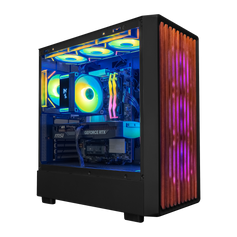
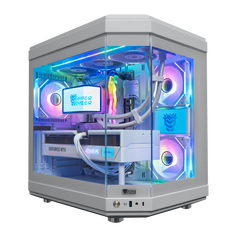
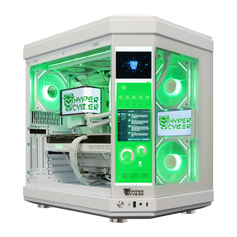
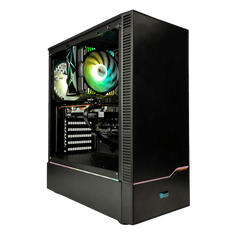
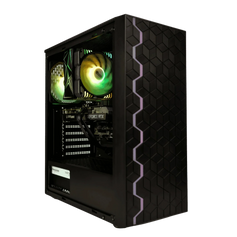
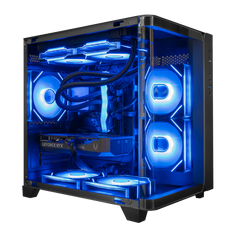
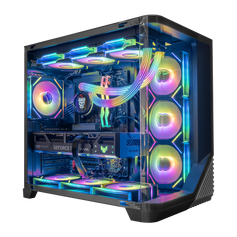
This is why component balance matters. Well-configured gaming PCs are designed so that the CPU and GPU are appropriately matched — neither one dramatically outpacing the other. When you buy a pre-built system from a reputable builder, this balance is already accounted for.
Browsing gaming PCs under $2,000 or performance PCs under $3,000, you'll find systems where the CPU and GPU tiers are deliberately matched for each price point — which is one of the key advantages of buying pre-built over assembling mismatched parts.
Real-World Example
A streamer runs an RTX 5070 paired with a Core i5 from four generations ago. In Call of Duty: Warzone, frame rates plateau at 120 fps regardless of graphics settings — lowering quality doesn't help much, and the GPU usage stays below 80%. Meanwhile, CPU usage is pinned at 100%. That's a textbook CPU bottleneck. Upgrading to a modern Core i7 or Ryzen 7 immediately unlocks the GPU's potential, pushing frames past 180+ fps.
By contrast, a player with a Ryzen 9 and an RTX 5060 Ti will see GPU usage near 99% while CPU usage stays comfortable. That's a healthy GPU bottleneck — the GPU is the limiting factor, which is exactly where you want the constraint in a gaming rig.
Common Types of Bottlenecks
|
Bottleneck Type |
Cause |
Symptom |
|
CPU Bottleneck |
CPU too slow for the GPU |
High CPU usage, low GPU usage, low FPS |
|
GPU Bottleneck |
GPU too slow for the CPU |
High GPU usage — this is normal and expected |
|
RAM Bottleneck |
Too little RAM or too slow |
Stuttering, slow load times, frame drops |
|
Storage Bottleneck |
Slow HDD or SATA SSD |
Long load times, texture pop-in |
|
VRAM Bottleneck |
Not enough VRAM for the settings |
Stuttering, crashes at high resolutions |
How to Identify a Bottleneck
The most direct method is monitoring component usage while gaming:
- GPU usage consistently below 90–95% while CPU usage is near 100% → CPU bottleneck
- GPU usage near 99–100% → normal GPU-limited behavior
- Stuttering despite low CPU and GPU usage → RAM or storage issue
Tools like MSI Afterburner, HWiNFO64, or in-game overlays can show real-time CPU and GPU usage percentages.
How to Avoid a Bottleneck
Match your components thoughtfully. A general rule of thumb:
- Pair high-end GPUs (RTX 5080, RTX 5090) with high-end CPUs (Core i9, Ryzen 9)
- Pair mid-range GPUs (RTX 5070, RX 9070) with mid-range CPUs (Core i7, Ryzen 7)
- Pair entry-level GPUs with entry-level CPUs
For AMD-based builds, Ryzen 7 gaming PCs pair well with mid-to-high-end GPUs, while Ryzen 9 systems are suited for the most powerful graphics cards. On the Intel side, Core i7 gaming PCs and Core i9 builds are designed with balance in mind at their respective tiers.
If you'd rather not think about it at all, the custom PC builder lets you configure a system with components that are matched from the ground up.
Related Concepts
- CPU — The most common bottleneck source in gaming PCs
- GPU — The intended performance limiter in a well-balanced gaming system
- Core Count & Thread Count — More cores reduce CPU bottlenecks in heavily threaded games
- Cache Memory — Low cache can contribute to CPU-side bottlenecks in latency-sensitive workloads
- RAM — Insufficient or slow RAM creates its own bottleneck category
- VRAM — Running out of VRAM causes a specific type of GPU-side bottleneck
Want a system where everything is balanced from day one? Browse our full range of gaming PCs or use our custom PC builder to configure a build matched to your exact needs.


