
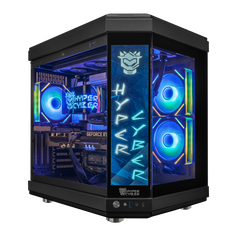
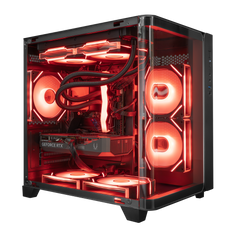
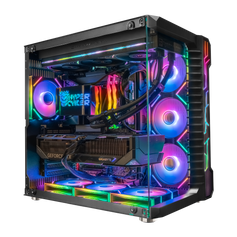
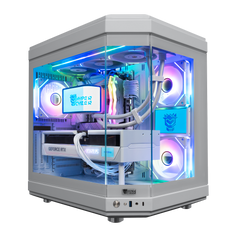
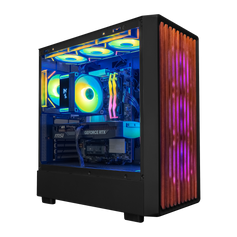
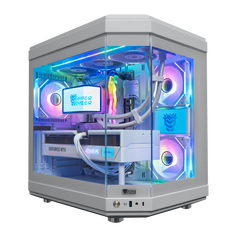
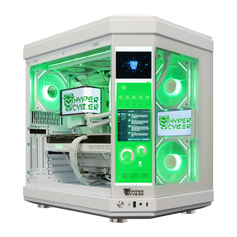
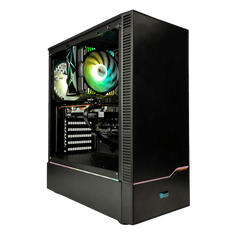
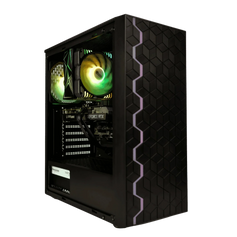
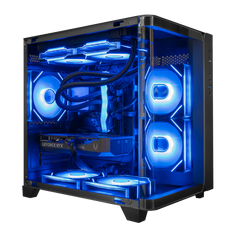

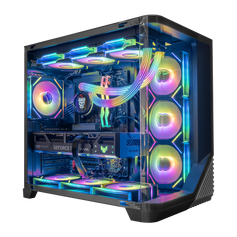
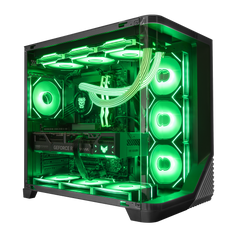
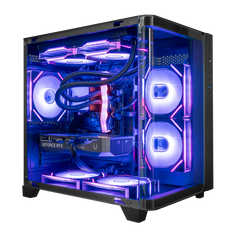
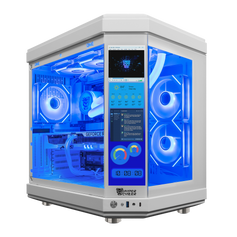
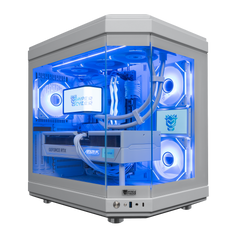







Heat management is an essential part of building or upgrading your computer. Your comfort during sessions, the longevity of your desktop, and even its performance depend on what PC cooling option you’ve chosen. Let’s break down the top solutions and see which one is the best for your gaming PC.
Heat Transfer Mechanics: Heat Pipes vs. Coolant Loops
Both systems share a common goal: moving heat away from the processor to prevent throttling. However, the methods they use to achieve this goal are distinct.
Air cooling relies on conduction and convection. A metal heatsink, usually made of aluminum fins and copper heat pipes, attaches directly to the processor. Inside the heat pipes, a small amount of liquid turns to vapor when heated, travels to the cooler parts of the pipe, condenses, and returns to the heat source. Fans attached to the heatsink push air through the fins, dissipating the thermal energy into the case.
Liquid cooling, specifically All-In-One (AIO) solutions, operates differently. A water block mounts to the CPU, and pumps cycle coolant through tubes to a radiator. The liquid absorbs heat from the CPU plate and transports it to the radiators. There, fans blow air through the radiator fins to cool the liquid before it cycles back to the block.
The primary differences lie in efficiency and heat capacity. Water has a higher specific heat capacity than air, meaning it can absorb more energy before its temperature rises significantly. This fundamental difference dictates how each CPU cooler handles sudden spikes in workload.
Thermal Headroom: Handling High-Performance Silicon
Modern processors push power limits further than ever before. When you select a cooling solution, you must match it to the TDP (Thermal Design Power) of your chip.
Air cooling is sufficient for most mid-range processors. High-end air towers can even handle powerful chips, but they have physical limits. The heat transfer is immediate, meaning temperature spikes happen quickly.
Water cooling excels when dealing with high-wattage components. The volume of liquid in the loop acts as a thermal buffer. It takes longer for the coolant to heat up, which keeps the CPU temperature more stable during short bursts of intense activity.
This thermal stability is why a high-performance gaming PC with i9 often utilizes a liquid cooler. The dense core count and high clock speeds of Intel's top-tier chips generate rapid heat buildup that standard air towers struggle to dissipate quickly enough.
If you plan on overclocking, liquid cooling provides the necessary headroom. It keeps the silicon cooler under sustained heavy loads, preventing frequency throttling. Performance stays consistent, and thermals remain in a safe range even when you push voltage limits.
Liquid cooling is generally superior for:
- Sustained rendering tasks where the CPU runs at 100% for hours.
- Heavy overclocking scenarios.
- Environments with higher ambient temperatures.
Acoustic Profile: The Sound of Silence
Silence is a priority for many users. The noise levels of your system depend heavily on fan quality and speed curves.
Air cooling noise correlates directly with fan RPM. As the CPU heats up, the fans must spin faster to push air through the dense metal fins. This creates wind noise. Large dual-tower air coolers can be surprisingly quiet because their massive surface area allows fans to spin slowly while still moving heat.
Liquid cooling introduces a second noise source: the pump. While pumps are generally quiet, they can emit a persistent low-frequency hum or high-pitched whine. Additionally, AIOs often use high-static pressure fans on radiators to force air through tight restrictions, which can be louder than standard case fans at high speeds.
In a direct comparison, a premium air cooler is often quieter at idle than an AIO. However, under load, water cooling may maintain lower fan speeds due to the efficiency of the liquid transfer, resulting in a deeper, less intrusive sound profile.
Longevity and Upkeep: Risks vs. Simplicity
Durability is where the gap between the two technologies widens.
Air cooling is the winner regarding reliability. A heatsink is a block of metal; it cannot fail. The only moving part is the fan, which is cheap and easy to replace. With minimal maintenance, an air cooler can last indefinitely. You simply need to clear dust from the fins occasionally.
Liquid cooling involves more complexity. AIO units contain moving parts (the pump) and liquid that can permeate tubes over time. The average lifespan of a sealed AIO cooler is typically 5 to 7 years. Potential failure points include:
- Pump failure (rendering the cooler useless).
- Coolant evaporation leads to air bubbles and noise.
- Leakage (rare, but catastrophic for other components).
While modern AIOs are very reliable, they cannot match the "install and forget" nature of air cooling. If you value low maintenance and want a component that will outlast multiple system upgrades, air is the logical choice.
Form Factor and Aesthetics: Fitting Your Build
Visual appeal and physical compatibility play a massive role in modern system design.
Air cooling towers are bulky. They sit directly in the center of the motherboard. This can cause installation headaches. Large coolers often overhang RAM slots, limiting your memory height choices or blocking the view of RGB modules. They also restrict access to fan headers and M2 slots around the socket.
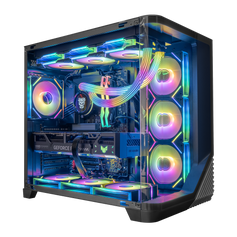
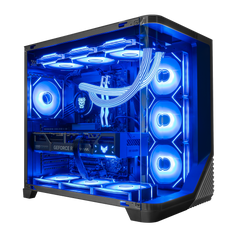
Liquid cooling offers a cleaner aesthetic. The CPU block is low-profile, and you mount the bulky radiator at the edge of the case. This arrangement improves internal airflow and keeps the area around the CPU socket open.
For builders creating a showcase AMD Ryzen 9 gaming desktop, the sleek look of an AIO is often preferred. Many modern pumps feature LCD screens that display system stats or custom GIFs, adding a layer of personalization that air towers cannot match.
However, you must verify case compatibility. Radiators require specific mounting points (240 mm, 360 mm) and sufficient clearance to avoid hitting the motherboard VRM heatsinks.
The Final Verdict on Cooling
Choosing the right solution requires balancing your budget, aesthetic preferences, and performance targets.
Cost is the final differentiator. High-end air coolers are generally cheaper than comparable liquid coolers. They offer excellent value for users who prioritize lifespan and simplicity. If you want a trouble-free experience and have a standard airflow case, an air CPU cooler is a solid investment.
Conversely, if you demand maximum performance for overclocking or want a sleek, modern look, liquid cooling is the better path. The ability to manage extreme thermals makes it the standard for enthusiast builds.
Summary of key factors to consider:
- Airflow: ensure your case has mesh panels if choosing air cooling.
- Space: check RAM clearance for air coolers and radiator support for liquid coolers.
- Usage: heavy workstations benefit from liquid; standard gaming rigs run fine on air.
Ultimately, both air cooling and liquid cooling are capable technologies. The differences in noise levels, maintenance, and installation should guide your decision. Evaluate the needs of your gaming PC and choose the method that aligns with your vision.


